
When I was a young advisor, I came into the business with a lot of ‘book’ smarts. I was educated, and I passed all my exams, but I was nervous about the client relationship part of the job. Seeing it from my clients’ eyes, I was picturing myself as a young kid trying to tell these experienced, successful people what to do with their money.
My sales manager took me aside and gave me a simple piece of advice: He said if you can tell people what they own, and why they own it, you will be OK.
Early in my career, giving each client that kind of personal understanding of their portfolio was possible, even working with pretty basic resources. Today, advisors are managing ever more complicated investments, while at the same time clients are more educated, sophisticated, and expect more personal, tailored service.
This is where AI-powered fintechs are stepping in to help make detailed reporting, education and explanation both more automated and more personalized. That level of white-glove service was traditionally accessible to UHNW investors with family offices able to invest extra time, but now a broader range of advisory firms can – and I believe should – make engaging, relationship-building reporting part of their offering.
Why does it matter? Because we are in the midst of the greatest wealth transfer in history, and the next generation of investors – in many cases, Millennials – have more investment choices than ever and their own attitudes towards investing. Consider the following from a recent Broadridge report:
- 59% of millennials say they will not invest in something they do not understand
- More than half are willing to consider working with a wide range of investment providers: full-service banks, mutual fund firms, alternative investment firms, major advisory firms, robo-advisors, and RIAs
- 72% are willing to move to a new financial provider if their existing provider does not meet their needs
Assets are moving across generations, and with that movement comes a simple question: will those assets stay where they are?
In many cases, they will not. In fact, among next-gen high-net-worth investors, 81% plan to switch from their parent’s wealth firm within 1-2 years after inheritance. (CapGemini, “Sail the Great Wealth Transfer,” 2025.)
That is why building relationships and being able to demonstrate a personal understanding of clients are becoming the most important factors in retaining and gaining assets under management. Investment performance still matters, of course. But in a crowded market, performance alone likely won’t create loyalty.
Personalization Is No Longer a Luxury
Across every part of life, people now expect tailored experiences. Their music, shopping, travel, and media are all shaped around their preferences. Wealth management is moving in the same direction.
That shift changes the advisor-client relationship. Firms that continue to act as though their services are irreplaceable and that they don’t need to go the extra mile to connect with clients on their own terms will find it harder to keep those clients engaged. And when engagement slips, retention often follows.
The firms that stand out will be the ones that make clients feel seen. That may mean more personalized portfolios. It should also mean communication in formats that fit different preferences and generations. It certainly means moving beyond the idea that a quarterly report and an annual check-in are enough. (Broadridge found that 69% of millennials prefer communications from their advisors monthly or more often.)
The Family Office Standard Is Spreading
This is where the family office model offers an important lesson. Family offices are built on the understanding that wealth management is about more than managing investments. It is about managing relationships deeply, across generations, and across a full financial picture.
That approach is now becoming relevant far beyond the ultra-high-net-worth market. RIAs, broker-dealers, and private banks are increasingly being asked to operate with a more holistic mindset. Clients want an advisor who understands not just their account balance, but their goals, family dynamics, and long-term plans.
In other words, they want some version of the white-glove experience that family offices have delivered for years.
That does not mean every firm needs to become a literal family office. But it does mean firms should borrow from that playbook: Find ways to bring more people into the conversation. Involve spouses, children, and heirs earlier. Create more thoughtful touchpoints. Make communication clearer, more relevant, and more human.
Simply finding ways to meet and engage with the next generation is a major gap. As of a few years ago, Broadridge reported that while 1/3 of millennials’ parents use a financial advisor, only 20% of millennials had ever met them. (Broadridge, “Decoding the Millennial Mindset,” 2019.)
Once advisors meet them, they have to build the new relationship on the next generation’s terms, not their parents – and that’s where fintech solutions can come in.
Better Service Now Requires New Tools and New Habits
There is one challenge, of course: deeper relationships and personalized communications take time, and time is the resource advisors have the least of.
Most advisors are already balancing portfolio management, planning, business development, research, compliance, and client communication. The expectation to provide more personalized, higher-touch service can sound unrealistic unless firms rethink how that service is delivered.
This is where technology matters. The best solutions should free the advisor to be more present, more prepared, and more effective in client relationships. Used well, modern reporting tools can help firms create more personalized communication, deliver more meaningful insights, and support a more consistent client experience at scale.
The market is squeezing firms from both ends. Smaller accounts are often moving to low-cost digital platforms. Larger, more complex relationships are increasingly drawn to firms that provide a more comprehensive and concierge-like level of service. The middle will become harder to defend for firms that do not adapt.
The opportunity is still enormous. But growth will go to the firms that understand a basic truth: clients are not looking only for access to markets. They are looking for confidence, clarity, and connection.
The advisor of the future will not win by sounding smarter than the client. They will win by helping the client feel smarter, more informed, and more involved.
That is the real advantage. And in the years ahead, it may be the clearest path to retaining assets, attracting new ones, and building relationships that last across generations.
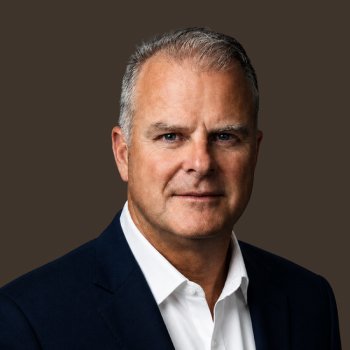
David Connor, Managing Director, North America, InvestSuite
David Connor is the Managing Director, North America of InvestSuite, a Leuven, Belgium-based global wealth technology company that provides digital investing infrastructure to banks, broker-dealers, asset managers, life insurers, pension funds, and fintech firms. A former advisor and wholesaler with decades of experience, David is now dedicated to helping advisors and their firms with their growth strategies.